My Mother's Keys

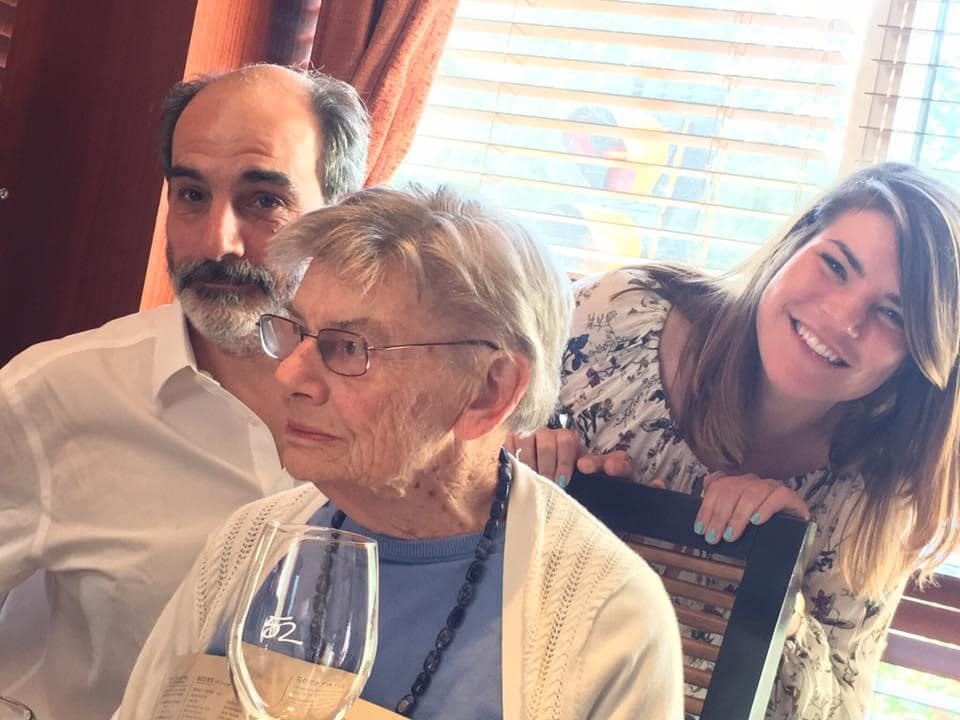
In November of 2019, I had a visit with my 95-year-old mother. This visit was, in many ways, completely familiar. But in one important way, very quietly, it was like no visit ever. In fact, during this visit, things changed - quietly - in an essential way.
A little background.
My mother is a remarkable woman. She is among the smartest people I’ve ever met. She is decisive, fiercely self-reliant, and opinionated. She has lived a remarkable life –a math major at Radcliffe, a career as a statistician, six kids, and decades of deep engagement as an activist for peace, civil rights, and the rights of the developmentally disabled. In particular ways she is extremely generous. And she remembers every fender-bender and every B “earned” by each of her kids.
Until the final year or two of her life, my mother remained just about as sharp as ever. (She passed in early 2020.) This is to say that, at 92, my mother was still *razor* sharp. She could name most US senators, every member of Nixon’s cabinet, and the crimes with which each was charged. It’s likely that you have never met anyone quite like my mother.
I love and admire my mother very much. But for most of my adult life, my mother and I have engaged by a particular set of unspoken rules. My mother is the boss of her home – she sets the rules and she sets the tone. I don’t presume to tell my mother what to do, *ever*. And while my mother and I often engage in substantial, rich, nuanced, and enjoyable conversations about important matters – politics and my kids, for example -- my relationship with my mother, for as long as I can remember, has been guarded. Full of admiration and respect. But guarded.
When I was younger, my mother and I struggled for sure. But for many years (decades, in fact) I’ve accepted - admiringly, respectfully, affectionately, and guardedly - that she is who she is ... and that I am who I am.
During my recent visit, something shifted. It was clear that my mother was in a different place than she had been only a month or two earlier. She was much less mobile. She was notably more forgetful. Most notably of all, perhaps, she had lost her *edge*; her determination to be in command of her space and surroundings had clearly diminished. In some meaningful way, she had let go. When I rattled around her kitchen, my mother didn’t call in to ask what I was doing or what was taking so long. She didn’t remind me to put the milk back in the refrigerator. She didn’t remind me that I’d put the corkscrew in the wrong drawer during my last visit. She didn’t call out my late arrival, or my sloppy grammar. And when I made a few suggestions – about dinner, for example –she said: “whatever you think.”
This was virtually unprecedented. It was a relief, for sure – perhaps for both of us. It was also a bit unsettling.
My mother lost her balance one morning. She called to me, and I found her on the floor of her bedroom. As I helped her up, she started to give instructions – “I just need you to …” That was OK, and utterly unsurprising to me. But it was clear that my mother’s way wasn’t going to work. So I said: “Mom… You need to listen to me!” She looked at me, and she said: “OK.”
That had never happened before.
Later that day, she looked at me and said: “Do you know where I keep my keys? If you need to use them, they are in the drawer of the hutch.” That definitely had never happened before.
Just like that, after all of these decades. No revolution, no arm-wrestling match. No declaration of surrender, no commentary on the wisdom of acceptance.
I was aware that all of this was *different* - arguably in an *essential* way. But it was an undramatic moment. An all but unrecognizable moment. A point of inflection. Barely noticeable.
I suspect that an outsider watching my mother and me would not have seen anything notable. An old woman and her oldish son negotiating what comes next.
This visit was sad, of course. It is sad to see this diminished version of my mother. But it was also one of the best visits I’ve ever had with my mother. I was relaxed. Unguarded. And so was she.
Over the course of the last morning of this visit, my mother said twice: “I don’t know what I would have done if you hadn’t been here.” She’d never said that before. (During a more recent visit, she said to my daughter and me: “thank you for taking care of me.” She’d never said that before.)
I was not fully aware of what was happening in “real time.” But on my way home, as I blew through Sturbridge, MA (an hour into to my trip) I suddenly *felt* something (literally). I *got* that something important had changed. I got that these encounters with my mother were all but unprecedented. I decelerated a bit, and, out loud, I said: “Whoa!”
I’m grateful for my mother, and to the universe. I’m grateful to have been in the light (and the shadow) of such a remarkable woman. And I am grateful that, at the very end, she chose to let go just a little bit. And I am grateful (and relieved) to discover that I was so instinctively willing to let my guard down. It could have gone differently.
Luck and gratitude are complicated, it turns out. I’m glad to have a lot of each
.